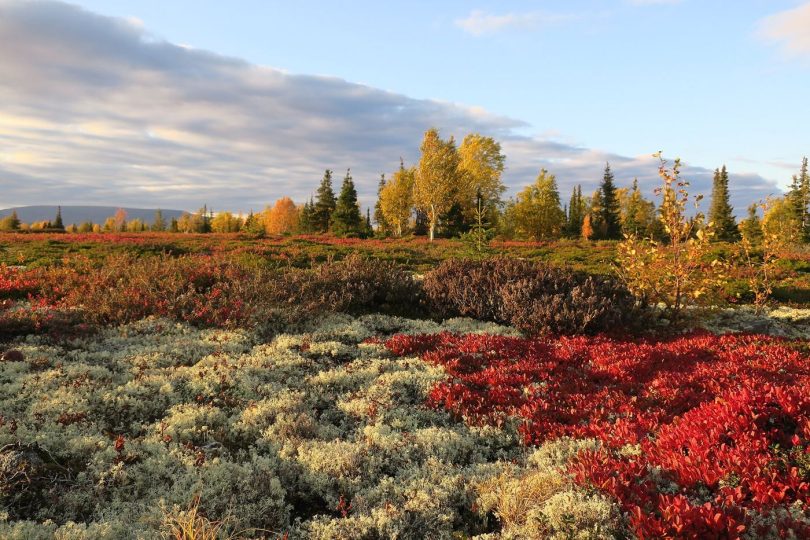

Beneath the frozen soils of the far north lies a vast store of dead plants and animals, locked in ice for thousands of years. This permafrost covers about a quarter of the land in the Northern Hemisphere, and it holds roughly twice as much carbon as the entire atmosphere. As the Arctic warms, the ice is melting, and the ancient organic matter is waking up. Microbes begin to break it down, releasing carbon dioxide and methane into the air, which warms the planet further and melts more permafrost. The thaw is already changing the land: roads buckle, buildings sink, and whole hillsides slump into the sea as the ice that held them together disappears. Villages in Alaska, Siberia and northern Canada are moving homes and schools as the ground beneath them softens.
What the Evidence Shows
Scientists are racing to measure how fast the carbon is escaping. Some of it has been frozen since the last ice age, and nobody knows how much will be released or how quickly, because much of the thaw happens in remote places that are hard to study. Researchers drill cores, fly sensors over the tundra and track the gases rising from thawing lakes, where bubbles of methane break the surface in winter. The feedback is one of the most worrying in climate science, because it is driven by warming itself and cannot easily be switched off. Even if human emissions stopped tomorrow, the permafrost already thawing would keep releasing carbon for decades. Scientists say the best defence is to limit warming now, before more of the frozen ground is lost. Reporting and analysis from sources such as NASA track the same developments, and specialists following the thawing permafrost say the direction is now consistent across independent lines of evidence.
The Wider Context
Funding bodies are watching the thawing permafrost closely because the work sits at the junction of basic curiosity and practical return. Grant panels increasingly ask for a path from discovery to application, while researchers push back that the most valuable uses of fundamental science are rarely the ones written into the original proposal. The tension is productive when both sides stay honest about timescales.
What Happens Next
The long view on the thawing permafrost is that fields advance by accumulation rather than by single announcements. This result adds a solid, checkable piece to a structure many teams are building, and its authors have shared their data so the piece can be tested from every side. That is how the picture eventually becomes reliable enough to act on. You can follow related developments in our coverage of science.
It is also worth remembering how quickly the picture in this area has changed before. Positions that looked settled a few years ago have been revised as new data arrived, and the same humility is appropriate now. The strongest coverage of this subject, and the most useful advice, tends to come from sources that update their views openly when the facts move, rather than defending an earlier position long after it has stopped fitting the evidence available.