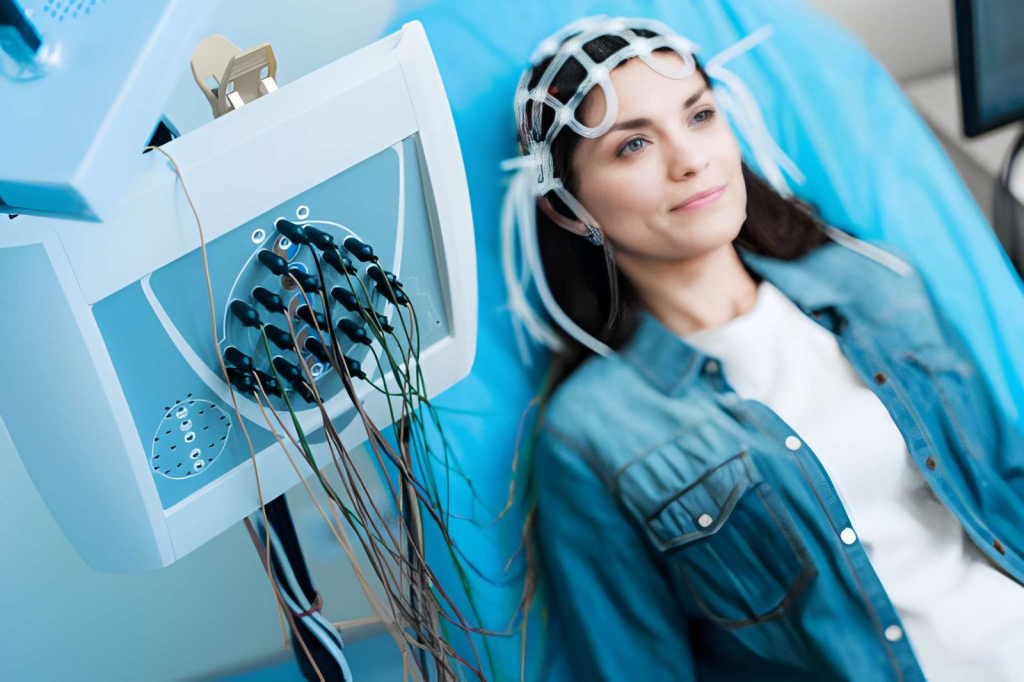
Depression can affect nearly every aspect of daily life. Persistent sadness, low motivation, fatigue, sleep changes, and difficulty concentrating can make work, relationships, and everyday responsibilities harder to manage. Although traditional treatments such as antidepressants and psychotherapy can be effective, some people continue to experience significant symptoms.
For eligible patients who have not achieved adequate improvement with conventional treatment, TMS therapy for depression may be another option to discuss with a qualified psychiatric provider.
For people exploring depression treatment in the Greater Ann Arbor area, understanding how TMS works, who may benefit, and what the treatment process involves can help them make informed decisions about their care.
What Is TMS Therapy?
TMS therapy, or Transcranial Magnetic Stimulation, is a non-invasive treatment that uses magnetic pulses to stimulate specific areas of the brain involved in mood regulation.
Unlike antidepressant medication, TMS does not require medication to circulate throughout the body. Treatment is performed in an outpatient setting, and patients remain awake during sessions.
Because of its targeted approach, transcranial magnetic stimulation has become an option for certain adults experiencing major depressive disorder, particularly when previous treatment has not provided sufficient improvement.
When Is TMS Considered for Depression?
Not everyone with depression requires advanced treatment. Many people experience improvement through psychotherapy, medication, lifestyle changes, or a combination of these approaches.
TMS may be considered when depression continues despite previous treatment efforts.
A psychiatric provider may review:
- Previous antidepressant medications
- Response to earlier treatments
- Duration and severity of depression
- Current symptoms
- Medical history
- Current medications
- Individual treatment goals
A comprehensive evaluation helps determine whether TMS is an appropriate option.
How Does TMS Therapy Work?
During a TMS session, a specialized magnetic coil is positioned against the patient’s scalp. The device delivers controlled magnetic pulses to a targeted region of the brain.
These pulses stimulate nerve cells in areas associated with mood regulation. Rather than relying on a single treatment, TMS is generally provided through a structured series of sessions.
The treatment settings and schedule can vary according to the patient’s needs and the specific treatment protocol being used.
Why Consider TMS Therapy in Greater Ann Arbor?
Patients looking for TMS therapy in Greater Ann Arbor may be interested in options beyond conventional antidepressant treatment.
TMS offers several practical differences from medication-based approaches:
- It is non-invasive.
- No surgery is required.
- Patients remain awake during treatment.
- Treatment takes place in an outpatient setting.
- There is typically no lengthy recovery period.
- Treatment directly targets specific brain regions.
These characteristics can make TMS an option worth discussing for appropriately selected patients.
What Happens During a TMS Treatment?
The treatment process begins with an evaluation. A qualified provider reviews the patient’s mental health history, previous treatments, current symptoms, and other relevant factors.
Once TMS is considered appropriate, treatment settings are established.
During each session, the patient sits comfortably while the magnetic coil is positioned against the scalp. Magnetic pulses are then delivered to the targeted brain region.
Patients remain awake and can communicate with the treatment team throughout the session.
After treatment, patients can generally leave the facility and continue with their normal activities.
How Long Does TMS Treatment Take?
TMS is typically delivered as a course of repeated treatment sessions rather than a single appointment.
The exact number and frequency of sessions depend on the treatment protocol and individual circumstances. Many treatment plans involve multiple appointments each week over several weeks.
Consistency is important because TMS relies on repeated stimulation over the treatment course.
Your provider can explain the recommended schedule and what to expect during the initial evaluation.
Potential Benefits of TMS Therapy for Depression
For appropriately selected patients, TMS therapy for depression may provide several potential advantages.
Non-Invasive Approach
TMS does not require surgery, injections, or implanted devices.
No General Anesthesia
Patients remain awake during treatment, so general anesthesia is not required.
Outpatient Treatment
TMS sessions are performed in an outpatient setting, allowing many patients to continue their normal routines.
Targeted Stimulation
TMS delivers magnetic stimulation to specific areas of the brain associated with mood regulation.
An Option After Medication
For people who have not experienced sufficient improvement with antidepressants, TMS may provide another treatment approach to discuss with a psychiatrist.
What Are the Possible Side Effects?
TMS is generally well tolerated, but some patients may experience temporary side effects.
These can include:
- Headache
- Scalp discomfort
- Tingling around the treatment area
- Lightheadedness
A qualified provider should review the potential risks and determine whether TMS is appropriate based on the patient’s medical history.
Monitoring Depression During Treatment
Depression treatment requires ongoing evaluation. A provider may monitor changes in:
- Mood
- Energy
- Motivation
- Sleep
- Concentration
- Daily functioning
- Overall treatment response
Regular assessments help the treatment team understand how the patient is progressing and determine appropriate next steps.
TMS may also be incorporated into a broader mental health treatment plan when clinically appropriate.
Finding TMS Treatment in Greater Ann Arbor
Choosing the right psychiatric provider is an important part of exploring advanced depression treatment.
Family Care Psychiatry provides individualized psychiatric care and evidence-based treatment options for patients dealing with depression and other mental health concerns.
The practice proudly serves patients throughout Greater Ann Arbor, including Ann Arbor, Canton, Brighton, Plymouth, Ypsilanti, and Chelsea, as well as surrounding communities across Washtenaw County, Wayne County, Livingston County, and Jackson County.
Final Thoughts
Depression does not affect everyone in the same way, and treatment that works for one person may not work for another. For patients who continue to experience significant symptoms despite conventional treatment, TMS therapy for depression may be an option worth discussing with a qualified mental health professional.
Transcranial magnetic stimulation provides a non-invasive approach that uses targeted magnetic pulses to stimulate brain regions involved in mood regulation.
If you’re considering TMS therapy in Greater Ann Arbor, a comprehensive psychiatric evaluation can help determine whether the treatment is appropriate for your symptoms, treatment history, and individual goals.