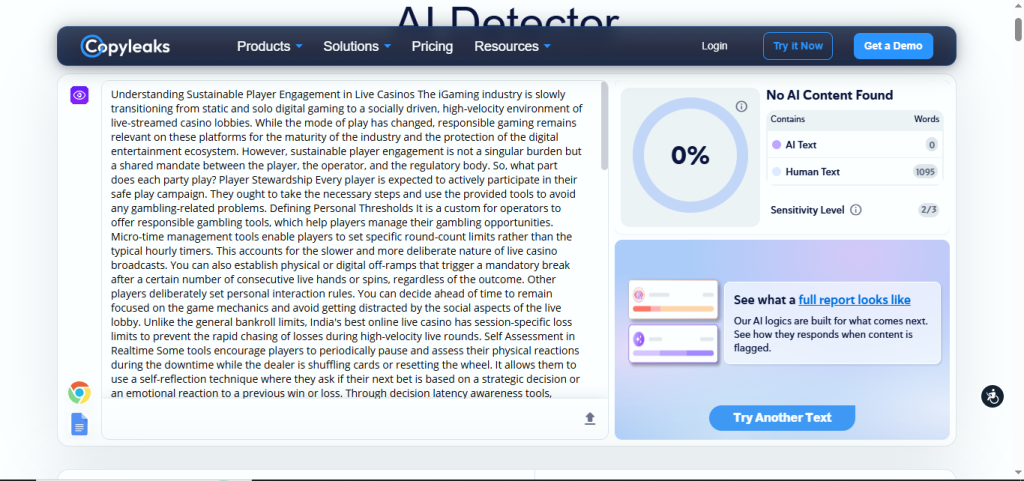

The iGaming industry is slowly transitioning from solo gaming to a socially driven, high-velocity environment of live-streamed casino lobbies. While the mode of play has changed, responsible gaming remains relevant on these platforms for the maturity of the industry and the protection of the digital entertainment ecosystem. Sustainable player engagement is a shared mandate between the player, the operator, and the regulatory body. So, what part does each party play?
Personal Responsibility
Every player is expected to take the necessary steps and use the tools and resources available to avoid any gambling-related problems.
Reputable operators offer responsible gambling tools, which help players manage their gambling. These allow players to set limits on things like how much they deposit, the time they spend playing or even how many rounds they play. In addition to general limits, India’s best online live casino has session-specific loss limits players can use to prevent them from chasing losses during high-velocity live rounds.
Live interfaces also have built-in session history sections where players can view their recent activity. This helps counteract the recency bias often felt in live gaming.
Platform-Driven Safeguards
Platforms are tasked with the technical responsibility to trigger internal flags for the compliance team when a player’s interactions deviate from their established baseline.
Algorithmic Player Monitoring
Some operators integrate AI-driven systems that analyze velocity, bet size, and session duration to identify markers of high-risk behavior. These AI tools reshape the traditional intervention mechanisms and they also monitor betting patterns, specifically looking for potential signs of problem gambling, like when users rapidly increase stakes following a series of losses in the live sessions.
Integrated Cooling Off Mechanisms
While players are the ones to utilize the responsible gambling tools, operators must ensure they are available and efficient. Operators should also provide the option of cooling-off periods, ranging from 24 hours to weeks, that are hard-coded into the account to prevent impulsive re-entry.
Some platforms integrate session limit hard stops that automatically disconnect the user from the live table once the self-imposed limit is reached, without considering the game’s current state. Developers are also encouraged to design the user interface in a way that these tools are accessible and visible at all times, rather than buried in settings menus.
Professional Staff Training
Live casinos should periodically train their live dealers and pit bosses to identify verbal cues in the live chat or erratic betting behavior that may signal a player is in distress. These dealers should also be educated on how to maintain a professional and supportive atmosphere without encouraging high-risk sentiments during the broadcast. This includes practicing how to handle aggressive and highly emotional interactions in the live lobby.
All staff members must also be fully aware of the internal chain of command for reporting suspected problematic behavior to the responsible gaming team.
Intervention Protocols
There should be clear protocols for the platform’s safety team to contact a player privately, whether via email, phone or in-app messaging, when monitoring systems indicate a high-risk session. Platforms should also have mechanisms in place to suspend a live session if a player displays clear signs of harm. This prioritizes players’ welfare over immediate revenue. Standard procedures should also be put in place to provide immediate and localized links to professional counseling or self-help organizations at the moment of intervention.
Regulatory Frameworks and Compliance
Regulatory boards oversee all gambling activities in a jurisdiction, and their role is to enforce compliance by all operators.
As a standard rule, regulators require all operators to integrate responsible gaming tools directly into the casino interface as a condition of their license. There are detailed protocols where regulators inspect the software’s ability to handle self-exclusion and reality checks. Failure to meet the minimum duty of care requirements can lead to fines and even license revocation.
They also require licensed operators to submit regular audits demonstrating their adherence to player protection standards. Third-party testing by bodies like eCOGRA and iTech Labs check both RNG games and physical equipment, such as automated shufflers and roulette wheels, to ensure mathematical randomness. There are also requirements for the data on the player’s screen to perfectly match the physical card dealt and other gameplay details.
All of this ensures a safe gaming environment for players.
Conclusion
High standards of responsibility serve as a primary differentiator among gambling platforms. Players value sites where user wellbeing is priortised as much as game variety, and are willing to play their part when the correct tools are made available. However, regulators still need to enforce the rules and provide standards that keep up with changing technology.